
Energy Transition Is Global. Strategy Is Local
Lessons from an SPE Distinguished Lecturer Journey
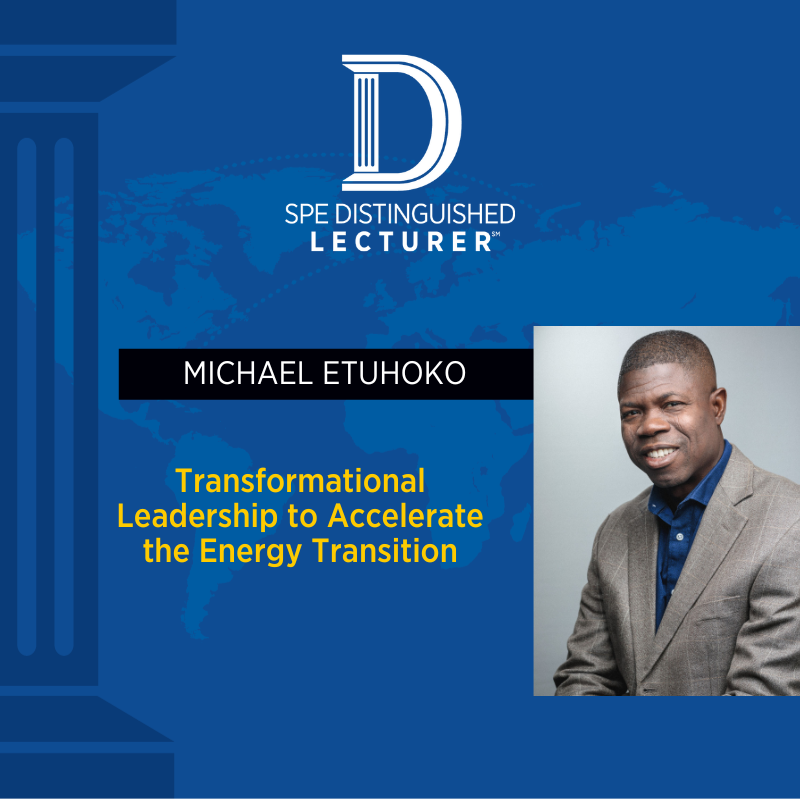
A global direction does not produce a universal pathway. For boards and executive teams, context (not imitation), should determine the pace, sequence and architecture of transition.
A global journey changed the question
Energy transition is often discussed as though the world is moving toward a common destination along a common path. My experience across multiple regions during my SPE Distinguished Lecturer journey reinforced a different conclusion: the direction of change may be global, but the pathway is not.
Different markets are navigating different combinations of energy security, infrastructure maturity, affordability, resource endowment, policy ambition, capital availability, technology readiness and institutional capability. Those differences are not secondary details. They shape what is economically credible, socially acceptable and operationally executable.
For boards and executive teams, this changes the strategic question. The task is not simply to decide whether to transition. It is to determine how, at what pace, in what sequence, and under which assumptions a transition pathway can create value without weakening the resilience of the system that must support it.
Context is not a footnote to strategy
There is no single energy-transition playbook. A strategy that appears compelling in one market may be unrealistic in another because the underlying conditions are different.
Some economies are primarily focused on decarbonizing mature energy systems. Others are still expanding access to reliable and affordable energy. Some have deep capital markets and extensive infrastructure. Others must build conventional and emerging energy systems at the same time. In one market, speed may be the strategic advantage. In another, sequencing may matter more than pace.
Benchmarking can be useful, but imitation is a poor substitute for strategic judgment. External ambition becomes dangerous when it is imported without sufficient examination of local economics, infrastructure, capability, social priorities and risk.
A more useful board-level question is therefore not, What are others doing? It is: What pathway is credible for us, given our assets, markets, capabilities and obligations?
Energy security is part of the transition architecture
One of the strongest lessons from engaging across different energy systems is that energy security and energy transition cannot be governed as separate conversations. Energy systems have to change, but they also have to work.
Customers require reliable supply. Industries depend on affordable energy. Governments consider economic resilience and national priorities. Companies need cash-generating assets capable of funding future investment. These realities can create tensions that are easy to simplify in policy language and difficult to manage in practice.
The strategic challenge is not to choose between the present and the future. It is to understand how the present enables the future, where current assets remain critical to resilience, and where dependence on existing systems may eventually become a constraint.
A credible transition pathway protects the ability to operate while creating the ability to change. That balance will look different across regions, and it will change over time.
Infrastructure often determines the feasible pace
Transition ambition is frequently expressed through targets. Execution, however, is constrained by physical systems.
Grids, pipelines, transport networks, storage, industrial clusters, data infrastructure, supply chains and permitting capacity all influence what can move from aspiration to operating reality. A technology may be commercially attractive in principle and still be difficult to scale if the enabling infrastructure is not ready.
This is why boards should pay close attention to dependencies. What must exist before an investment can perform as expected? Which infrastructure bottlenecks could delay the pathway? Which dependencies sit outside the company's direct control? What happens if those systems develop more slowly than the strategy assumes?
These are not implementation details. They are strategic conditions.
Institutional capability sets another boundary
Technology can often be acquired faster than an organization can build the capability required to use it well. The same is true of strategy. A company can announce a transition ambition before it has the leadership, governance, technical skills, operating systems or partnerships needed to execute it.
This gap matters because transition is not delivered by technology alone. It depends on institutions capable of making coherent decisions, integrating new and existing systems, challenging assumptions, learning from experience and adjusting course when conditions change.
In high-consequence sectors, organizational readiness deserves as much attention as technology readiness. The feasible pace of change is partly determined by the capacity of the institution to absorb it without losing control of safety, reliability, accountability or performance.
Sequencing matters more than imitation
A useful way to think about transition is as a sequence of strategic commitments rather than a single destination. Some decisions should move now. Others should be staged. Some require capability to be built first. Others depend on infrastructure, policy or economics reaching a threshold.
This makes sequencing a leadership discipline. The question is not whether an organization supports transition in principle. The question is whether its choices form a coherent pathway in practice.
A well-sequenced strategy makes dependencies visible. It distinguishes what must happen first from what can follow later. It avoids locking the organization into assumptions that have not yet been tested. And it creates room to learn as the external environment evolves.
The strongest transition strategies may therefore look less like a fixed master plan and more like a disciplined set of commitments, options and decision points.
What boards and executives should test
A contextual transition strategy should survive a small number of demanding questions:
Which local conditions most strongly shape the economics and feasibility of our pathway?
What existing assets and systems remain strategically important to resilience?
Which infrastructure or institutional dependencies could delay execution?
Which assumptions are borrowed from other markets rather than grounded in our own context?
Where does sequencing matter more than speed?
What capabilities must exist before the next major commitment is made?
How will we know when changing conditions require us to adjust the pathway?
These questions do not produce a universal answer. That is precisely the point.
The global lesson is not convergence
Perhaps the most important conclusion from the journey is that energy transition should not be confused with strategic convergence. Different regions will move differently. Technologies will mature at different speeds. Infrastructure will develop unevenly. Companies will make different portfolio choices.
Variation is not necessarily evidence of failure or insufficient ambition. It may be evidence that strategy is responding to context.
The leadership challenge is therefore not to replicate a universal model. It is to build an organization capable of making coherent choices as conditions evolve, while remaining clear about the economic, operational and societal obligations it must continue to meet.
Energy transition is global. Execution is local. Strategy must connect the two.
For boards and executive teams, the question worth carrying forward is: Is our transition strategy designed around the future we hope for, or resilient enough for the conditions we may actually face?
